Research programme 02
Mutant p53 gain of function and tumour evolution
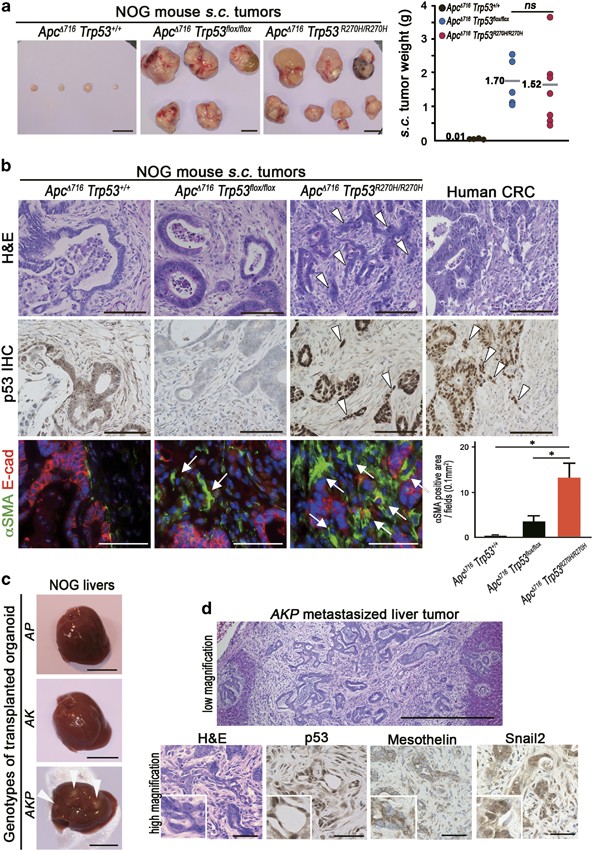
We investigate when missense p53 mutants acquire oncogenic activities and how those activities depend on cellular lineage, cooperating pathways and tumour architecture.
Central question
Which molecular and tissue contexts convert a stabilised p53 mutant from a lost tumour suppressor into an active driver of cancer progression?
Many tumour-derived p53 missense proteins accumulate to high levels and engage partners not used by wild-type p53. The laboratory studies how these mutants reshape transcription, chromatin, metabolism, invasion and cell survival.
A central goal is to resolve why mutant gain of function is robust in some experimental and clinical settings but difficult to detect in others, and to define the contexts in which it creates a targetable dependency.