p53 · Mutant gain of function · Cancer vulnerabilities
Prives Laboratory
Columbia UniversityWelcome to our lab
Understanding p53 in every molecular context
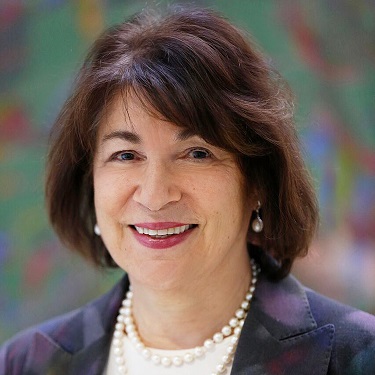
Principal investigator
Carol Prives, Ph.D.
Da Costa Professor of Biology
Research programmes
What we investigate

Wild-type p53 structure and transcriptional choice
We define how p53 recognises chromatin, binds response elements and selects context-specific programmes of arrest, repair, metabolism and cell death.

Mutant p53 gain of function and tumour evolution
We investigate when missense p53 mutants acquire oncogenic activities and how those activities depend on cellular lineage, cooperating pathways and tumour architecture.

MDM2, MDMX and p53 protein stability
We study the regulatory circuitry that keeps wild-type p53 low in unstressed cells while permitting mutant p53 to accumulate in tumours.

Metabolism, invasion and therapeutic vulnerabilities
We trace how p53 status rewires the mevalonate pathway, cytoskeletal signalling and tumour invasion to identify mutation-selective treatment opportunities.
Selected publications
Recent and defining work
Mutant p53 regulates cancer cell invasion in complex three-dimensional environments through mevalonate pathway-dependent Rho/ROCK signaling
Proceedings of the National Academy of Sciences
Mutant p53 Gain of Function: Why Many See It, Why Some Do Not
Cancer Discovery
p53: A tale of complexity and context
Cell
Systematic Characterization of p53-Regulated Long Noncoding RNAs across Human Cancers Reveals Remarkable Heterogeneity among Different Tumor Types
Molecular Cancer Research
Li-Fraumeni Syndrome-Associated Dimer-Forming Mutant p53 Promotes Transactivation-Independent Mitochondrial Cell Death
Cancer Discovery
Join the lab